When Personal Influence Meets AI: The Next-Generation Gateway to Digital Commerce Is Taking Shape
- The Beverly Arts

- Jun 23
- 9 min read
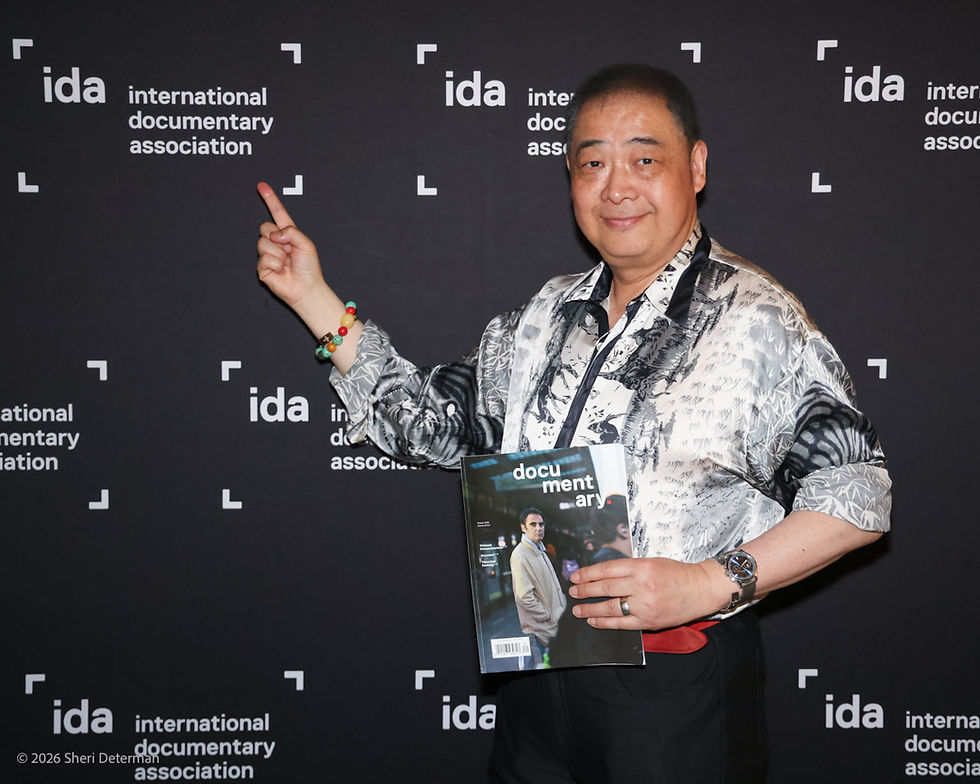
Author: Peter Wu, President/Founder of Xavvi

Many people harbor a misconception about North American influencers: that having a large following automatically equates to making a lot of money. This holds true for only a small fraction of top-tier influencers; for the vast majority of content creators, the reality is quite different. I have met many influencers in Los Angeles. Some have hundreds of thousands of followers on TikTok or millions on Instagram, while others garner massive view counts on their videos. To outsiders, they appear to lead lives of freedom, glamour, and influence. Yet, after sitting down and chatting with them for half an hour, you discover the anxiety lurking beneath the surface. What are they anxious about? It isn't about what to wear or how to make a video look good; it’s about very practical concerns: Where will next month's income come from? Will brand partnerships dry up? Will platform algorithms change? Will my account suddenly get throttled? My fans like me, but will they actually spend money on me? I’m creating content every day, but how long can this business last?
This is the reality for many North American influencers.
They appear to command significant traffic, yet lack a stable business system. They seem to have a fan base, but the relationships with those fans largely remain locked within the platforms. They look like a brand, yet often it is just one person struggling to keep it all going. I once heard a North American influencer say something that left a deep impression on me. She said, "Peter, it’s not that I don’t want to make more money; I simply don’t have the time to do anything else." That statement essentially captures the core contradiction of the influencer economy. An influencer’s income relies on influence, but delivering that influence requires a real person's time—and human time is finite. There is a limit to how many videos you can shoot, private messages you can answer, brand calls you can take, scripts you can edit, and places you can physically be in a single day.
Yet, the demands the business world places on influencers are virtually limitless. Brands want immediate responses. Fans want daily interaction. Platforms want constant updates. Algorithms want continuous content testing. Merchants want you to drive sales. Agents want you to stick to schedules. Partners want data. Consumers want you to be authentic, entertaining, approachable, and professional—all without looking too much like an advertisement. How can one person possibly sustain that in the long run? That is why many influencers hit a ceiling after reaching a certain stage. It isn't that their follower count stops growing; it’s that their personal capacity has reached its limit. I have spent forty years working with code and twenty years dealing with e-commerce traffic, all while viewing business issues through the lens of AI system architecture. These experiences have led me to a firm conclusion: any industry that relies heavily on repetitive human labor will eventually be restructured by systematic tools.
This has happened in e-commerce, advertising, and content creation. The influencer economy will be no exception. Over the past twenty years, I have watched countless merchants evolve from knowing nothing about traffic generation to mastering ad placement, content creation, live streaming, and private traffic management. I have also seen platforms shift from "selling shelf space" to "selling traffic," and then from "selling traffic" to "selling algorithmic recommendations." But the challenges we face today have changed.
The biggest bottleneck today isn't just a lack of traffic; it’s the extreme inefficiency of commercial collaboration. Merchants struggle to find the right influencers. Influencers can't handle the volume of merchant inquiries. Fans miss out on consistent engagement. Platforms capture the lion's share of the data. Content creators churn out material daily but fail to truly transform their influence into sustainable assets. That is why I say what North American influencers need isn't just another advertising deal—it’s an AI team.
Not an AI tool. An AI team. There is a world of difference between the two. An AI tool might simply help write copy, generate an image, or edit a video. An AI team, however, works continuously to support an influencer’s entire commercial lifecycle. In Xavvi’s vision, an influencer shouldn't rely on just a single human assistant; she should have a team of AI agents operating 24/7.A "Manager Agent" to screen brands, evaluate partnership value, and handle business communications. A "Director Agent" to write scripts, break down storyboards, and design content for short videos and micro-dramas. A "Store Manager Agent" to maintain her branded shop, product pages, and membership perks. A "Customer Service Agent" to answer fan questions and manage one-on-one interactions. A "Data Agent" to track orders, fan behavior, repurchase rates, and content performance. This isn't about turning influencers into machines.
On the contrary, it frees influencers from repetitive, machine-like labor. For a truly influential influencer, the most valuable asset isn't the number of private messages manually answered or ad scripts personally edited each day. Their greatest value lies in their persona, style, aesthetic, trust based relationships, and connection with fans. In the past, scaling these elements required a significant investment of human time. But in the AI era, they can be structured, trained, delegated, and managed. This is the point I’ve always emphasized: an influencer shouldn't merely be a content creator; they should operate as an AI-powered "solopreneur" business. This concept is crucial. Influencers of the past were like freelancers: they took an ad to earn a fee, or shot a video to collect a collaboration payment. If platform traffic was high, they were busy; if it was low, they felt anxious.
An AI-powered solopreneur business is different. They have their own AI teams for business development, content creation, fan services, and data analysis, as well as their own AI-driven online store system. They can cultivate their influence for the long term rather than simply selling their time over and over again. Let me give you a simple example. If a North American beauty influencer wants to collaborate with an Asian skincare brand today, the traditional process is incredibly complex.
The brand must first locate the influencer. Both parties need to agree on pricing, discuss product selling points, ship samples, draft an English brief, revise the script, handle filming, review the content, and finally publish it. Post-publication, they must analyze data, monitor comments, and track conversions. This entire process can take two weeks, a month, or even longer. If language barriers, time zone differences, or stylistic mismatches arise, the collaboration becomes highly inefficient. Many potential business partnerships ultimately fail due to the sheer cost of communication. However, if the influencer has their own AI team, the scenario changes completely.
The brand uploads product details, budget, and target market information. The merchant AI organizes the requirements. The influencer AI assesses whether the product aligns with the influencer's persona, audience demographics, and content style. A "Director Agent" generates content concepts, while an "Agent Agent" negotiates preliminary terms. A "Store Manager Agent" evaluates the product's suitability for the influencer's shop, and a "Data Agent" forecasts potential audience reach and conversion paths. Ultimately, the human influencer only needs to make key decisions: Do I endorse this brand? Am I willing to authorize this content? Does this collaboration align with my long-term image?
The human role does not disappear; instead, it is elevated to a higher level. No longer bogged down by minutiae, the influencer returns to the position of making critical decisions. This is the true value of AI for the influencer economy. I do not believe AI will replace truly charismatic influencers. For individuals lacking personality, stories, aesthetic sensibility, or trusting relationships, AI has nothing to amplify. What AI amplifies is existing influence. For an influencer with a clear persona, AI can extend their influence from an eight-hour day to a twenty-four-hour cycle. For one with strong fan relationships, AI can scale interactions from hundreds to tens of thousands of people. For an influencer with commercial value, AI can help transition them from occasionally accepting ads to managing their own brand assets for the long term.

Peter Wu, President/founder of Xavvi
That is precisely why Xavvi didn't just sign a contract for a single advertisement. A single ad is too fleeting: shot today, posted tomorrow, and with the data finalized the day after, the collaboration ends. What we truly value is the influencer’s AI digital twin and the rights to manage their long term commercial operations. While it sounds like a technological venture, at its core, it represents an evolution of the talent agency model. Traditional agencies sign contracts for a celebrity's time their physical availability. Yet, human time is finite and heavily constrained by location and schedule. Xavvi signs the influencer’s AI digital twin, allowing their commercial potential to be systematically replicated and continuously managed. The influencer can rest while their AI agent negotiates partnerships. They can sleep while their AI customer service representative engages with fans. They might be in Los Angeles, yet their AI twin can simultaneously serve merchants and fans across the US, Asia, and Europe.
This is not fantasy; it is the inevitable trajectory of business efficiency. In the past, many viewed the influencer economy merely as a "traffic business." I believe, however, that the next phase is not about traffic—it is about managing AI-driven assets. Traffic is merely the entry point; trust is the core; data is the foundation; AI is the amplifier; and the commercial system itself represents the long-term value. This is the key message I want to convey to the influencers I speak with: Don't view yourself merely as a content creator. See yourself as a future digital brand enterprise. Your voice is an asset. Your image is an asset. Your content style is an asset. Your relationship with fans is an asset. Your commercial endorsement power is also an asset.
In the past, managing these assets systematically was difficult because you were just one person. In the AI era, however, they can all be transformed into a commercial system that is operational, scalable, and capable of sustainable growth. Of course, there is one caveat: AI must not be used indiscriminately.
What do influencers fear most? That AI-generated content won't truly reflect who they are. That they’ll damage the trust of their fans. That brand collaborations will feel forced or inauthentic. That they’ll ruin their long-term personal brand just to make a quick buck. That’s why Xavvi’s AI agent design goes beyond mere content generation; it begins by understanding the influencer's persona and commercial boundaries.
Which brands are a good fit? Which products should be rejected? What tone of voice aligns with her? What content could cause harm? Which fan interactions should be automated? Which situations require human judgment? These are the real problems an AI Chief Architect needs to solve. It’s not about showing off technical prowess or building a flashy demo. It’s about integrating business rules, content style, user data, access controls, compliance boundaries, and long-term revenue models into a single, cohesive system. Having coded for forty years, I’ve learned a fundamental truth: a truly valuable system isn't the one with the most features, but the one that reliably solves real-world problems.
Having managed e-commerce traffic for twenty years, I’ve learned another truth: traffic itself has no loyalty—only relationships built on trust generate compound value. That’s why my approach to Xavvi isn't driven by technology or a narrative designed to woo investors. It’s driven by the genuine pain points influencers face. They need income but don't want to lose their identity. They need commercial partnerships but don't want to be held hostage by ads. They need fan engagement but lack infinite time. They need global opportunities but lack a global team. They need to turn their influence into an asset but don't have the system to do it. Xavvi exists to provide them with exactly that system.
In the first article, I discussed the pain points faced by merchants: they have great products but lack efficient ways to connect with North American consumers. In this article, I address the pain points of influencers: they possess influence but lack an AI-driven business system to monetize that influence over the long term. These two issues are, in fact, two sides of the same coin. Merchants cannot find influencers; influencers cannot handle the demand from merchants. Merchants lack content; influencers lack business systems. Merchants need low-cost market testing; influencers need a way to monetize continuously without consuming their own time. Therefore, the real opportunity lies neither solely with the merchants nor solely with the influencers—it lies in the space between them.
Whoever can efficiently connect merchant needs with influencer influence using AI agents will have the opportunity to reshape the next generation of e-commerce. This is precisely what Xavvi is doing. In the past, an influencer was like a small shop open only during the day. When awake, she could create content, accept sponsorships, and interact with fans; when she was tired, business came to a halt. In the future, a mature influencer will operate like a 24-hour digital flagship store. The human provides the soul, aesthetic vision, judgment, and trust, while AI handles execution, collaboration, content creation, customer service, data management, and business scaling.
This does not render the human unimportant. Instead, it gives truly influential individuals the opportunity—for the first time—to possess the same level of business infrastructure as major corporations. In the next article, I will delve into more fundamental issues: When a merchant's AI meets an influencer's AI, how does business collaboration occur automatically? Why can blockchain be used to record data and computing power assets? What specific problems does the A2A Protocol aim to solve? Only by exploring this level can we clearly see that AI-agent e commerce is not merely a marketing concept, but an upgrade to the underlying operating system of e-commerce itself.


The Beverly Arts News is sponsored by Art Hearts Fashion, Mogo, MDSUN, Shennel Trading, XAVVI, ISEGSTAR, World Peace One, Crab Grabber, InLight Foundation, Jiannan Huang Art Institute, Yi Ke Art in Beverly, Wenkang Xue Design Studio, and The Beverly Arts Foundation